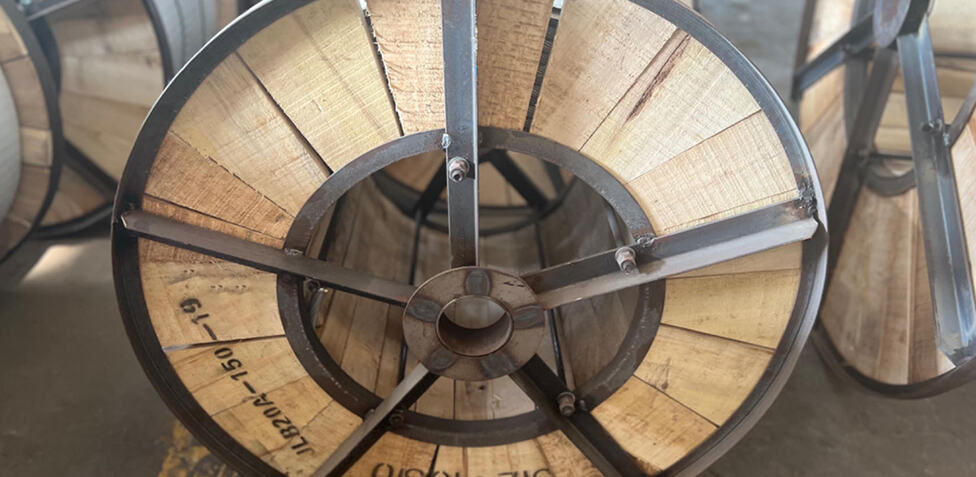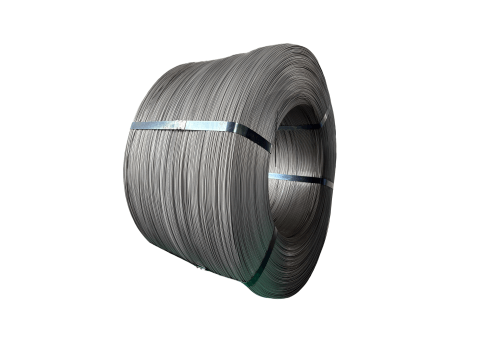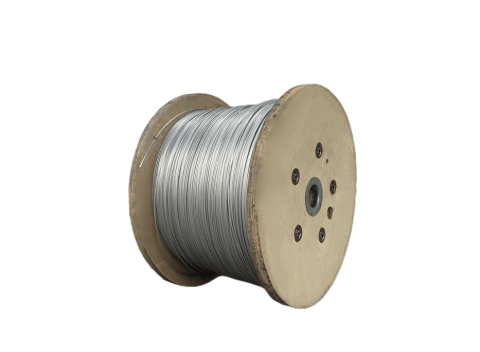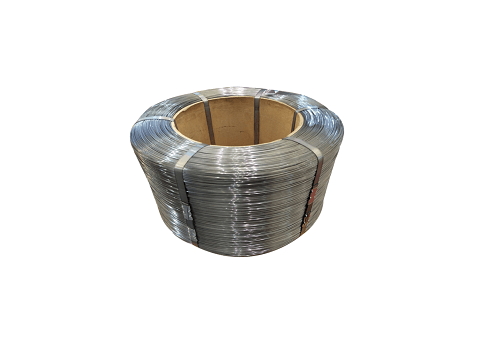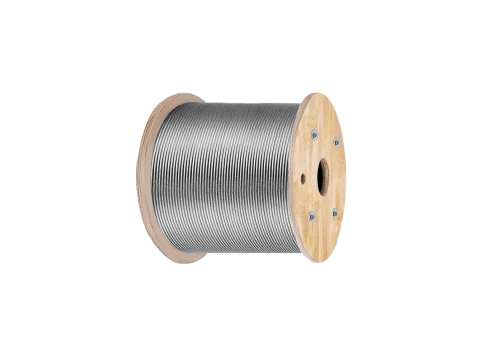
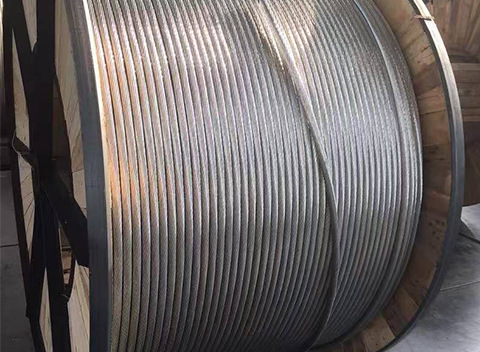
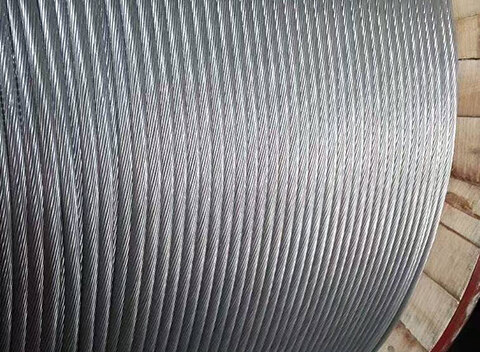
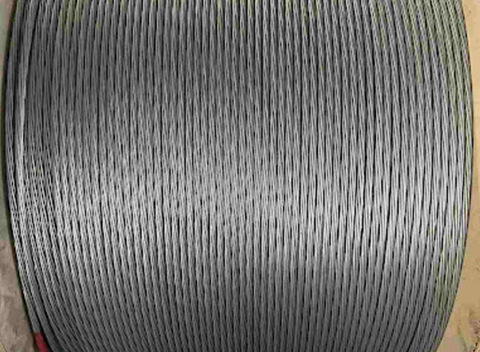
-Aluminum-clad steel strand is formed by twisting multiple aluminum-clad steel wires. It maintains excellent electrical conductivity and tensile strength, along with strong corrosion resistance and structural stability.
-It is widely used in overhead transmission lines, grounding wires, and other key power infrastructures, suitable for coastal and heavily polluted environments.
-Annual production capacity of 100,000 tons, supporting a wide range of customer-specific requirements.
JLB14
JLB20A
JLB27
JLB40
| Nominal Cross Section | Calculated Area | No. of Wires | Diameter | Unit Mass per Length | Rated Breaking Load | DC Resistance at 20℃ | |
| Single Wire | Stranded Wire | ||||||
| (mm²) | (mm²) | (n) | (mm) | (mm) | (kg/km) | (kN) | (Ω/km) |
| 30 | 29.1 | 7 | 2.30 | 6.90 | 210.4 | 46.24 | 4.2899 |
| 35 | 34.4 | 7 | 2.50 | 7.50 | 248.6 | 54.63 | 3.6309 |
| 40 | 41.6 | 7 | 2.75 | 8.25 | 300.7 | 66.11 | 3.0008 |
| 45 | 46.2 | 7 | 2.90 | 8.70 | 334.5 | 73.52 | 2.6984 |
| 50 | 49.5 | 7 | 3.00 | 9.00 | 357.9 | 78.67 | 2.5215 |
| 55 | 56.3 | 7 | 3.20 | 9.60 | 407.2 | 87.26 | 2.2161 |
| 65 | 67.3 | 7 | 3.50 | 10.50 | 487.2 | 104.4 | 1.8525 |
| 70 | 71.3 | 7 | 3.60 | 10.80 | 515.4 | 108.3 | 1.7510 |
| 80 | 79.4 | 7 | 3.80 | 11.40 | 574.3 | 120.7 | 1.5716 |
| 90 | 90.2 | 7 | 4.05 | 12.00 | 652.3 | 137.1 | 1.3835 |
| 95 | 95.1 | 7 | 4.16 | 12.50 | 688.2 | 144.6 | 1.3113 |
| 80 | 80.3 | 19 | 2.32 | 11.60 | 583.8 | 127.7 | 1.5609 |
| 100 | 101 | 19 | 2.60 | 13.00 | 733.2 | 160.4 | 1.2428 |
| 120 | 121 | 19 | 2.85 | 14.30 | 881.0 | 192.7 | 1.0343 |
| 150 | 148 | 19 | 3.15 | 15.80 | 1076.2 | 229.5 | 0.8467 |
| 170 | 173 | 19 | 3.40 | 17.00 | 1253.9 | 267.4 | 0.7267 |
| 185 | 183 | 19 | 3.50 | 17.5 | 1328.7 | 283.3 | 0.6858 |
| 210 | 210 | 19 | 3.75 | 18.8 | 1525.3 | 319.0 | 0.5974 |
| 240 | 239 | 19 | 4.00 | 20 | 1735.4 | 362.9 | 0.5251 |
Reference standards: ASTM B548, ASTM B711, ASTM B415; IEC 1099; GB/T 17937-2024.
| Nominal Cross Section | Calculated Area | No. of Wires | Diameter | Unit Mass per Length |
Rated Breaking Load |
DC Resistance at 20℃ | |
| Single Wire | Stranded Wire | ||||||
| (mm²) | (mm²) | (n) | (mm) | (mm) | (kg/km) | (kN) | (Ω/km) |
| 30 | 29.1 | 7 | 2.30 | 6.90 | 194.2 | 38.97 | 2.954 |
| 35 | 34.4 | 7 | 2.50 | 7.50 | 229.4 | 46.04 | 2.5002 |
| 40 | 41.6 | 7 | 2.75 | 8.25 | 277.6 | 55.71 | 2.0663 |
| 45 | 46.2 | 7 | 2.90 | 8.70 | 308.7 | 61.96 | 1.8581 |
| 50 | 49.5 | 7 | 3.00 | 9.00 | 330.3 | 66.30 | 1.7636 |
| 55 | 56.3 | 7 | 3.20 | 9.60 | 375.9 | 75.44 | 1.5260 |
| 65 | 67.3 | 7 | 3.50 | 10.50 | 449.6 | 85.53 | 1.2756 |
| 70 | 71.3 | 7 | 3.60 | 10.80 | 475.7 | 90.49 | 1.2057 |
| 80 | 79.4 | 7 | 3.80 | 11.40 | 530.0 | 99.24 | 1.0822 |
| 90 | 90.2 | 7 | 4.05 | 12.00 | 602.1 | 109.1 | 0.9527 |
| 95 | 95.1 | 7 | 4.16 | 12.50 | 635.2 | 112.3 | 0.9030 |
| 80 | 80.3 | 19 | 2.32 | 11.60 | 538.8 | 107.6 | 1.0748 |
| 100 | 101 | 19 | 2.60 | 13.00 | 676.7 | 135.2 | 0.8558 |
| 120 | 121 | 19 | 2.85 | 14.30 | 813.1 | 162.4 | 0.7122 |
| 150 | 148 | 19 | 3.15 | 15.80 | 993.3 | 198.4 | 0.5830 |
| 170 | 173 | 19 | 3.40 | 17.00 | 1253.9 | 226.0 | 0.5004 |
| 185 | 183 | 19 | 3.50 | 17.5 | 1226.3 | 232.2 | 0.4722 |
| 210 | 210 | 19 | 3.75 | 18.8 | 1407.8 | 262.3 | 0.4114 |
| 240 | 239 | 19 | 4.00 | 20 | 1601.8 | 288.9 | 0.3616 |
| Nominal Cross Section | Calculated Area | No. of Wires | Diameter | Unit Mass per Length |
Rated Breaking Load |
DC Resistance at 20℃ | |
| Single Wire | Stranded Wire | ||||||
| (mm²) | (mm²) | (n) | (mm) | (mm) | (kg/km) | (kN) | (Ω/km) |
| 35 | 34.4 | 7 | 2.50 | 7.50 | 205.7 | 37.11 | 1.8828 |
| 40 | 41.6 | 7 | 2.75 | 8.25 | 248.9 | 44.9 | 1.5561 |
| 45 | 46.2 | 7 | 2.90 | 8.70 | 276.8 | 49.94 | 1.3993 |
| 50 | 49.5 | 7 | 3.00 | 9.00 | 296.3 | 53.44 | 1.3075 |
| 55 | 56.3 | 7 | 3.20 | 9.60 | 337.1 | 60.8 | 1.1492 |
| 65 | 67.3 | 7 | 3.50 | 10.50 | 403.2 | 72.74 | 0.9606 |
| 70 | 71.3 | 7 | 3.60 | 10.80 | 426.6 | 76.95 | 0.9080 |
| 80 | 79.4 | 7 | 3.80 | 11.40 | 475.3 | 85.74 | 0.8149 |
| 90 | 90.2 | 7 | 4.05 | 12.00 | 539.9 | 97.39 | 0.7174 |
| 95 | 95.1 | 7 | 4.16 | 12.50 | 569.7 | 102.8 | 0.6800 |
| 100 | 101 | 19 | 2.60 | 13.00 | 606.9 | 108.9 | 0.6444 |
| 120 | 121 | 19 | 2.85 | 14.30 | 729.2 | 130.9 | 0.5363 |
| 150 | 148 | 19 | 3.15 | 15.80 | 890.8 | 159.9 | 0.4390 |
| 170 | 173 | 19 | 3.40 | 17.00 | 1037.9 | 186.3 | 0.3769 |
| 185 | 183 | 19 | 3.50 | 17.5 | 1099.8 | 197.4 | 0.3556 |
| 210 | 210 | 19 | 3.75 | 18.8 | 1262.5 | 226.6 | 0.3098 |
| 240 | 239 | 19 | 4.00 | 20 | 1436.5 | 257.9 | 0.2723 |
| Nominal Cross Section | Calculated Area | No. of Wires | Diameter | Unit Mass per Length |
Rated Breaking Load |
DC Resistance at 20℃ | |
| Single Wire | Stranded Wire | ||||||
| (mm²) | (mm²) | (n) | (mm) | (mm) | (kg/km) | (kN) | (Ω/km) |
| 35 | 34.4 | 7 | 2.50 | 7.50 | 161.5 | 23.37 | 1.2708 |
| 40 | 41.6 | 7 | 2.75 | 8.25 | 195.4 | 28.27 | 1.0502 |
| 45 | 46.2 | 7 | 2.90 | 8.70 | 217.3 | 31.44 | 0.9444 |
| 50 | 49.5 | 7 | 3.00 | 9.00 | 232.6 | 33.65 | 0.8825 |
| 55 | 56.3 | 7 | 3.20 | 9.60 | 264.6 | 38.28 | 0.7756 |
| 65 | 67.3 | 7 | 3.50 | 10.50 | 316.6 | 45.80 | 0.6483 |
| 70 | 71.3 | 7 | 3.60 | 10.80 | 334.9 | 48.45 | 0.6128 |
| 80 | 79.4 | 7 | 3.80 | 11.40 | 373.2 | 53.98 | 0.55 |
| 90 | 90.2 | 7 | 4.05 | 12.00 | 423.9 | 61.32 | 0.4842 |
| 95 | 95.1 | 7 | 4.16 | 12.50 | 447.2 | 64.70 | 0.4589 |
| 100 | 101 | 19 | 2.60 | 13.00 | 476.5 | 68.6 | 0.4349 |
| 120 | 121 | 19 | 2.85 | 14.30 | 572.5 | 82.42 | 0.362 |
| 150 | 148 | 19 | 3.15 | 15.80 | 699.4 | 100.7 | 0.2963 |
| 170 | 173 | 19 | 3.40 | 17.00 | 814.8 | 117.3 | 0.2543 |
| 185 | 183 | 19 | 3.50 | 17.5 | 863.5 | 124.3 | 0.24 |
| 210 | 210 | 19 | 3.75 | 18.8 | 991.2 | 142.7 | 0.2091 |
| 240 | 239 | 19 | 4.00 | 20 | 1127.8 | 162.4 | 0.1838 |
-Its durability in corrosive environments far exceeds that of other materials, significantly reducing maintenance and replacement costs.
-High strength allows longer spans, smaller sag, and heavier loads under storm conditions.
-Aluminum-clad steel strand features a thicker aluminum cladding layer and is lighter in weight compared to galvanized steel strand of the same size. This combination of light weight and high strength allows it to achieve the same sag as steel strand during installation while applying less tension, thereby reducing the mechanical stress on towers or supporting structures.
-Widely used in power and communication sectors: commonly used for ACSR/AW conductors, grounding wires, etc.